
The Historical Society of Liberia has begun a volume for every head of state since 1848. D. Elwood Dunn, who spent years arguing the country needed them, sits on the board.
SILVER SPRING, Md. — In 2011, D. Elwood Dunn published a three-volume set running to 1,913 pages, collecting 141 State of the Nation addresses delivered by Liberian presidents between 1848 and 2010, from Joseph Jenkins Roberts to Ellen Johnson Sirleaf.
Buried in it was a complaint. The country had this enormous body of state papers, Dunn wrote, and scholars had barely touched it. What Liberia actually needed was serious biographies of the people who wrote those speeches.
Fifteen years later, someone is writing them.
The Historical Society of Liberia has launched its Presidents Biography Series, a project that will eventually run to 24 volumes, one for each person who has held the office. Five biographies and their authors have been announced. At least a dozen writers have put their names forward to cover thirteen presidents, with manuscripts due through 2028. All of the authors are Liberian.
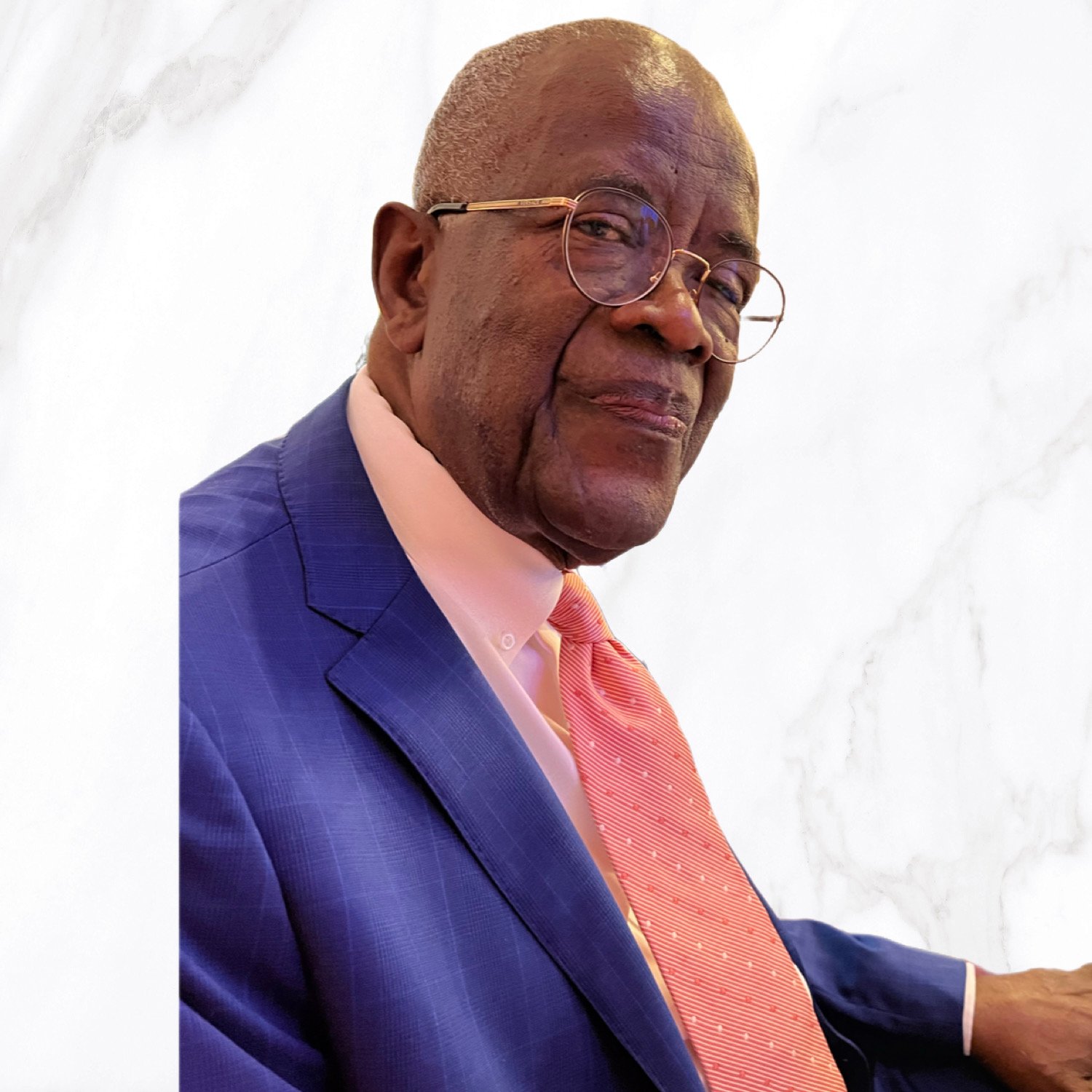
Dunn is one of three directors on the Society's board, alongside its chair, Dr. William E. Allen, and Dr. Cassandra Mark-Thiesen.
“Presidential biographies now, because they are long overdue,” Dunn said. “At 179 years of independence, Liberians should have produced biographies of their presidents.”
The first volume takes up Edwin Barclay, president from 1930 to 1944. Its author, Anthony Barclay, writes that his subject's role in Liberian history is “generally sketchy and devoid of robust analysis.” The Society's board, in its foreword to the volume, makes the same point about the whole run of presidents: for a country that has produced 24 presidents since 1848, a run the board suggests no other African state can match, book-length studies of its leaders are “remarkably scarce.”
Another of the authors is the Rev. Kedrick Brown, at work on a biography of Joseph James Cheeseman, who was president from 1892 until his death in office in 1896. Brown is a son of Mary Antoinette Brown Sherman, who led the University of Liberia from 1978 to 1984 and was the first woman to head a university in Africa. Dunn dedicated the 2011 volumes to her and to her husband, George Flamma Sherman, a former Liberian Secretary (Minister) of education. Brown found the dedication only recently, when he pulled Volume One off a shelf at Princeton.
Between 1974 and 1980 Dunn served in the Liberian government, first as assistant minister of foreign affairs and later as Minister of State for Presidential Affairs and chief of staff to President William R. Tolbert, Jr. He was traveling with an advance team when the April 1980 coup ended that government. He lectured briefly at the University of Liberia afterward, then moved his family to the United States.
The academic career that followed lasted about 35 years. He holds a bachelor's degree from Cuttington College and Divinity School and a master's and doctorate from The American University in Washington. He taught at the University of Liberia, at Cuttington, at Seton Hall and at Fordham's Lincoln Center campus before spending three decades at Sewanee: The University of the South, where he is the Alfred Walter Negley Professor of Political Science Emeritus. He edited the Liberian Studies Journal from 1985 to 1995 and retired from teaching in 2012.
He told that story himself in a 2022 memoir, A Liberian Life, published by Brill.
Both halves of the biography inform how he reads his country's history, and he resists the framework most often applied to it. Liberian historiography has long been organized around a split between settler descendants and indigenous populations. The Society's board says in the same foreword that it wants the series to loosen narratives “constrained by simplistic binaries and enduring stereotypes.”
Dunn put it more personally in a 2022 interview with the Review of African Political Economy. “I don't see consistently two Liberias,” he said. “My lived experience has not been two Liberias. I see complexities. I see a mosaic.”
The decision to commission only Liberian authors was deliberate. The Society, founded on 6 August 2021 under the motto “Know and Preserve,” also runs a committee that tracks down Liberian archives and artifacts held in foreign institutions and presses for their return. It traces its own lineage to a Liberian Historical Society started in the early 1960s by the historian and first female Liberian PHD holder, Hannah Abeodu Bowen Jones, who died in 2023.
“Like the Historical Society, the project is a projection of Liberian identity, the stories of Liberia by Liberians themselves,” Dunn said. “This does not preclude foreign scholarly engagement.”
He has kept his own hand in. He co-authored the Historical Dictionary of Liberia and wrote History of the Episcopal Church of Liberia Since 1980: A Sequel, along with decades of journal articles. In 2012 Liberia named him National Orator for its 165th independence anniversary, where he asked the nation to take an honest look at what he called its triple heritage-traditional Africa, Islam, and the Western world.
He is based now in Silver Spring, Maryland, and still consults privately for governments and researchers working on Liberian and African questions. He describes himself, without much elaboration, as a committed researcher of things Liberian.
On what the series will amount to, he is willing to be more expansive.
“The 24 biographies, when completed and published, will constitute a significant contribution to the country's historical and cultural heritage.”